Filippo Tommaso Marinetti in Trieste

Filippo Tommaso Marinetti was born on 22 December 1876 in Alessandra, Egypt.

His early poetic works reflect the influence of Decadentism and draw inspiration from Symbolist poetry. He contributed to the Italian-French magazine “Anthologie-Revue“ and to “Il Marzocco“. He entered Milan’s literary circles, where he stood out for his volcanic temperament. He published the epic poem La conquête des êtoiles (Paris, 1902), the comic tragedy Le Roi Bombance (Paris, 1905), and the small volume D’Annunzio Intime (Milan, 1903). ‘Effeti’, as his friends called him after the initials of his name, founded the international magazine “Poesia“ in 1905 with Sem Benelli and Vitaliano Ponti.

1908 marked a turning point in his political commitment and the formulation of his aesthetic principles. In February 1909, he published the Official Manifesto of Futurism in Paris in “Le Figaro“, and in August 1909 – in “Poesia“ – the poetic manifesto Uccidiamo il chiaro di Luna. This incendiary language was closely linked to the contents of the Technical Manifesto of Futurist Literature, which advocated the destruction of syntax in poetry, the ‘free flow of words’ and ‘wireless imagination’. He set out his ideas on artistic realisation in Zang Tumb Tumb, published in Milan in 1914.

Together with the first adherents of the avant-garde, Marinetti disseminated the manifestos of the various arts. The Manifesto of Futurist Painting, the Manifesto of Futurist Sculpture (1910), the Manifesto of Futurist Music, the Manifesto of Futurist Theatre (1915), Tattilism (1921) and, finally, the Manifesto of Futurist Cuisine (1931) were published.

Sent to Libya in 1911 by the French newspaper “L’Intransigeant“ following the outbreak of the Italo-Turkish War, he published the prophetic novel Le monoplan du pape in France, which was translated into Italian in 1914.

As the First World War drew near, “Effeti” threw itself into the campaign in favour of intervention, organising a series of demonstrations in which Benito Mussolini also took part. Having enlisted as a volunteer, Marinetti emerged from the conflict having been awarded the Bronze Medal twice. Following the publication in 1918 of the Manifesto of the Futurist Political Party, the following year he and his group joined the Italian Combat Groups, which had just been founded by Mussolini. Resentment over the ‘mutilated victory’ and the failure to award Fiume and Dalmatia to Italy subsequently led him to take part, alongside Gabriele D’Annunzio, in the Fiume Expedition.

In 1935, Marinetti published L’Aeropoema del Golfo della Spezia, the first and most famous work of Futurist aeropoetry. At the age of fifty, he enlisted as a volunteer in the Ethiopian War (1936).

Oscillating between deep doubts about the figure of the Duce and a constant quest for the action promised by Fascism, he also took part in the events of the Second World War and the Russian Campaign, before joining the Italian Social Republic.

He died in Bellagio, on Lake Como, on 2 December 1944, surrounded by the care of his beloved wife, Benedetta Cappa, and his three daughters, Ala, Vittoria and Luce.
The Marinetti Itinerary in Trieste was conceived and written by Alessandra Sirugo.

We would like to thank the Fototeca dei Civici Musei di Storia ed Arte, Alessandra Relli, the ‘C. Schmidl’ Civic Theatre Museum, the ‘P. Revoltella’ Civic Museum and the Gallery of Modern Art for the images.

Graphic design by Diego Bertazzolo, Printing Centre of the Municipality of Trieste for the Schools, Education and Libraries Department.

01. VIA DIAZ, 27

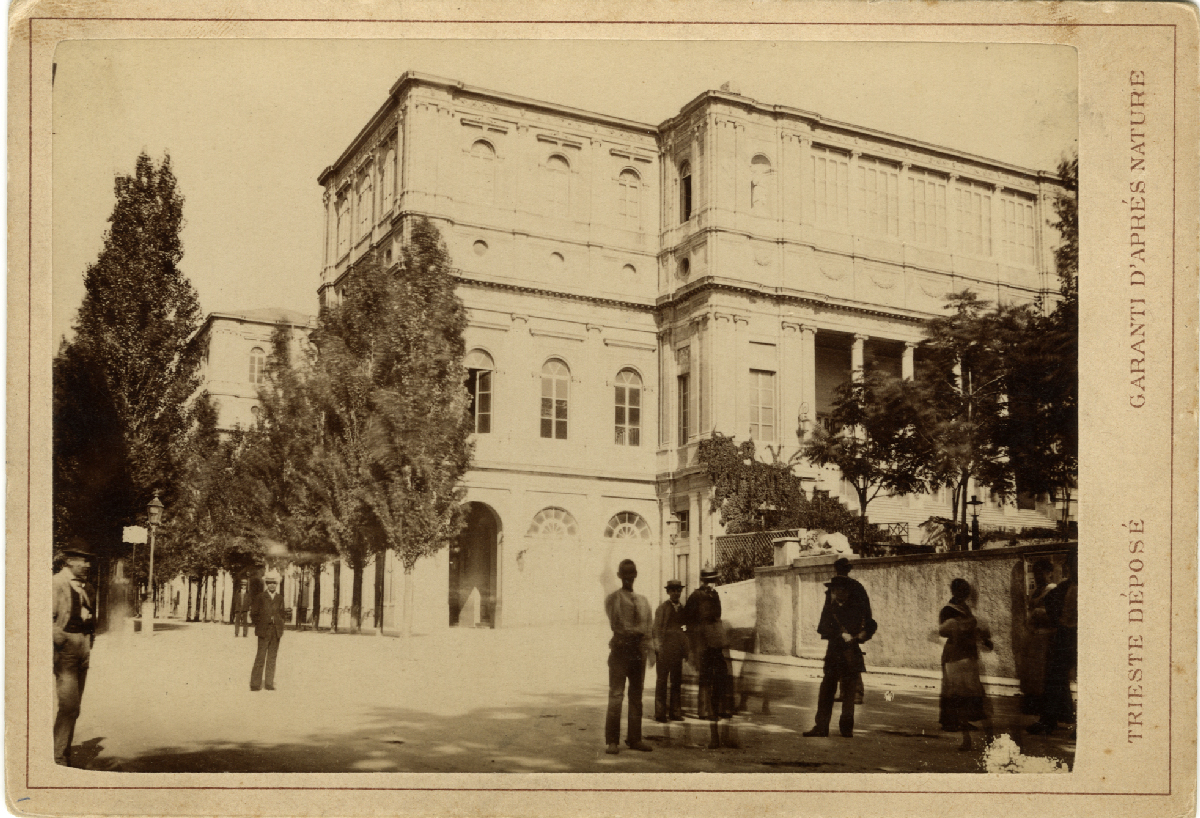
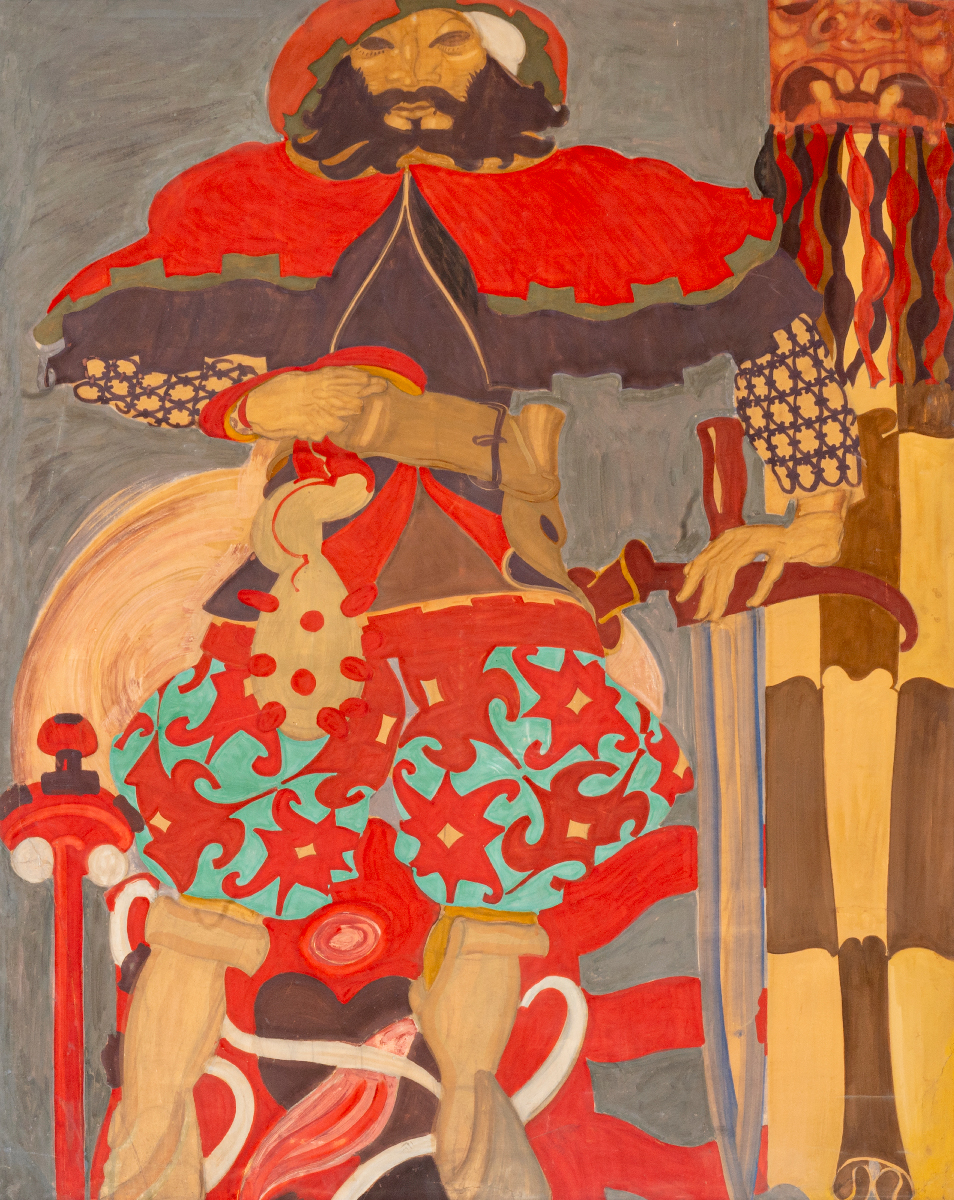
The Gallery of Modern Art at the “P. Revoltella” Civic Museum preserves and promotes the legacy of a number of Trieste-based artists who were leading figures in the Julian Futurist Movement linked to Marinetti. In particular, the “Sergio Molesi” Library houses the panels painted in tempera on cardboard in 1916 by Vito Timmel (Vienna 1886–Trieste 1949) for the Cine Teatro Ideal, situated in the RAS Building. Furthermore, the Museum’s Gallery exhibits pastels and photocompositions by Giorgio Carmelich (Trieste 1907 – Bad Nauheim 1929) and several masterpieces of Futurist aeropainting, including works by Tullio Crali (Igalo, Montenegro, 1910 – Milan, 2000).

Numerous figures are depicted in Timmel’s frieze, drawn from mythology and literature spanning different eras and cultures, in a style influenced by the Vienna Secession and Gustav Klimt.

Vito Timmel, Mafarka the Futurist, 1916 decorative frieze for the Cinema Ideal in Trieste “Sergio Molesi” Library at the “P. Revoltella” Civic Museum and Gallery of Modern Art Photo: Revoltella Municipal Museum, Gallery of Modern Art

02. PIAZZA UNITÀ D’ITALIA

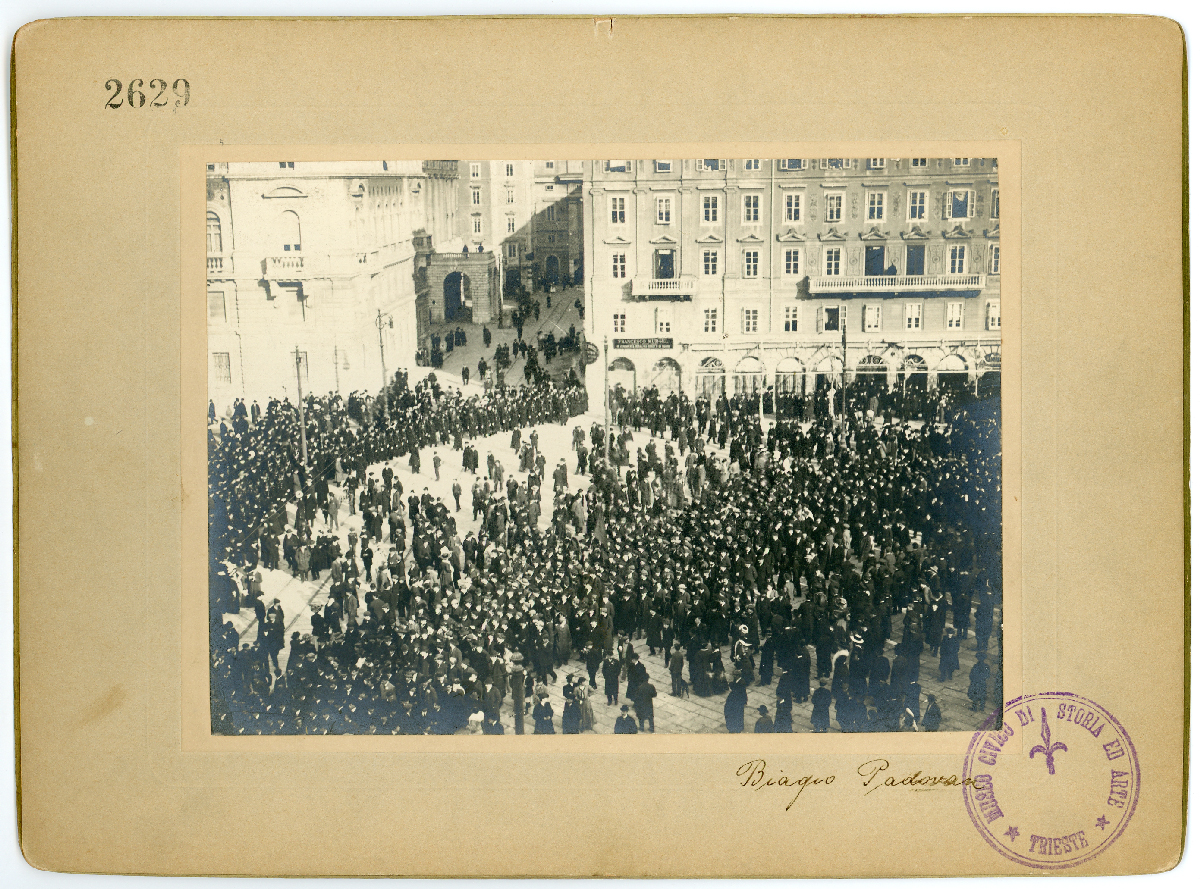
Filippo Tommaso Marinetti saw Trieste for the first time on 6 December 1908, when, in a significant expression of his support for Irredentism, he attended the funeral of Guglielmo Oberdan’s mother. That day, he gave a lecture on Gabriele D’Annunzio in a packed hall lent by the Società di Minerva to the Università Popolare di Trieste. During the first decade of this organisation’s existence, its activities attracted the participation of Trieste’s citizens who identified with the ideals of Italianness, despite the controls and censorship imposed by the Austrian authorities. Marinetti was arrested by the police during that stay; however, his arrest was not due to the content of the lecture on D’Annunzio, but to his vehement political and irredentist activities carried out in the city in the days immediately following.

Biagio Padovan (fotografo), Dimostrazione studentesca pro Università italiana a Trieste; comizio di protesta per i fatti di Vienna, 29 novembre 1908. Fototeca dei Civici Musei di Storia ed Arte - inv. F002629
Biagio Padovan (photographer), Student demonstration in support of the Italian University in Trieste; protest rally over the events in Vienna, 29 November 1908 Photo Archive of the Civic Museums of History and Art – inv. F002629

03. PIAZZA DELLA BORSA

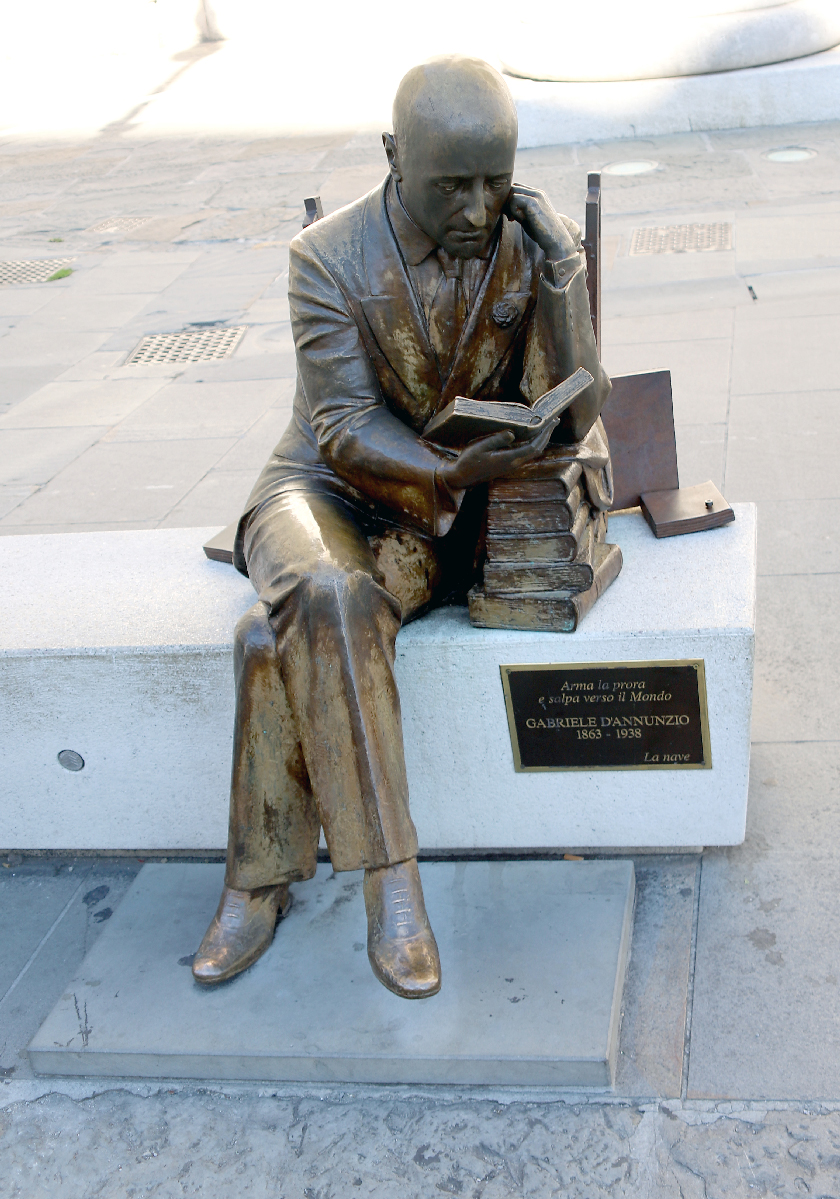
The statue of Gabriele D’Annunzio, depicted in the pensive pose of a famous photograph, was erected in Piazza della Borsa in 2019. Marinetti’s relationship with D’Annunzio was initially contentious. In 1908, the founder of Futurism published Les Dieux s’en vont, D’Annunzio reste, his tribute to Giosuè Carducci, who had died in 1907, and whom he regarded as superior to the ‘Poeta Vate’. However, Marinetti and D’Annunzio’s paths crossed in the post-war period. In fact, Marinetti took part in the Fiume expedition in 1919.

Alessandro Verdi, "Gabriele D'Annunzio" bronzo. Foto Alessandra Relli, Fototeca dei civici Musei di Storia ed Arte.
Alessandro Verdi Gabriele D’Annunzio bronze Photo by Alessandra Relli, Photo Archive of the Municipal Museums of History and Art

04. CORSO ITALIA, 12

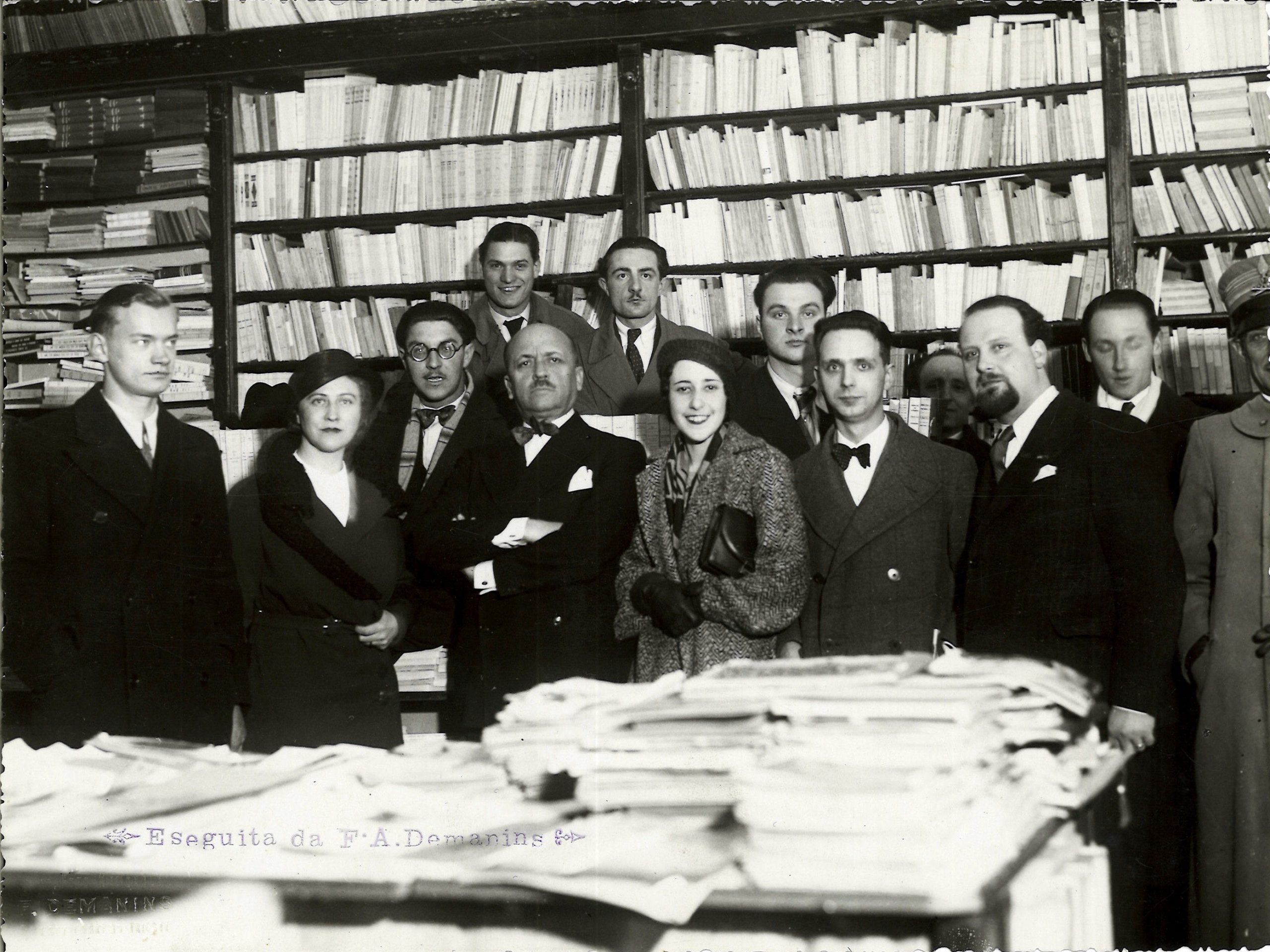
Former Cappelli Bookshop

The photograph was taken by the Futurist Ferruccio Demanins inside the bookshop, which opened shortly after the First World War on Corso Italia in Trieste. At the centre of the scene is F. T. Marinetti; to his right is the ‘aeropainting’ artist Tullio Crali, whilst to his left are the dancer and choreographer Giannina Censi – who played the role of Simultanina at the Politeama Rossetti in 1931 – the Trieste-born Futurist Bruno G. Sanzin, and the bookshop’s manager, Cappelli.

Ex Libreria Cappelli. Fotografia di Giannina Censi, Tullio Crali, F. T. Marinetti e Bruno G. Sanzin alla Libreria Cappelli di Trieste, 1. aprile 1942 coll. Biblioteca Civica “A. Hortis”
Photograph of Giannina Censi, Tullio Crali, F. T. Marinetti and Bruno G. Sanzin at the Cappelli Bookshop in Trieste, 1 April 1942 from the “A. Hortis” Public Library collection

05. VIA DEGLI ARTISTI, 3 and 8

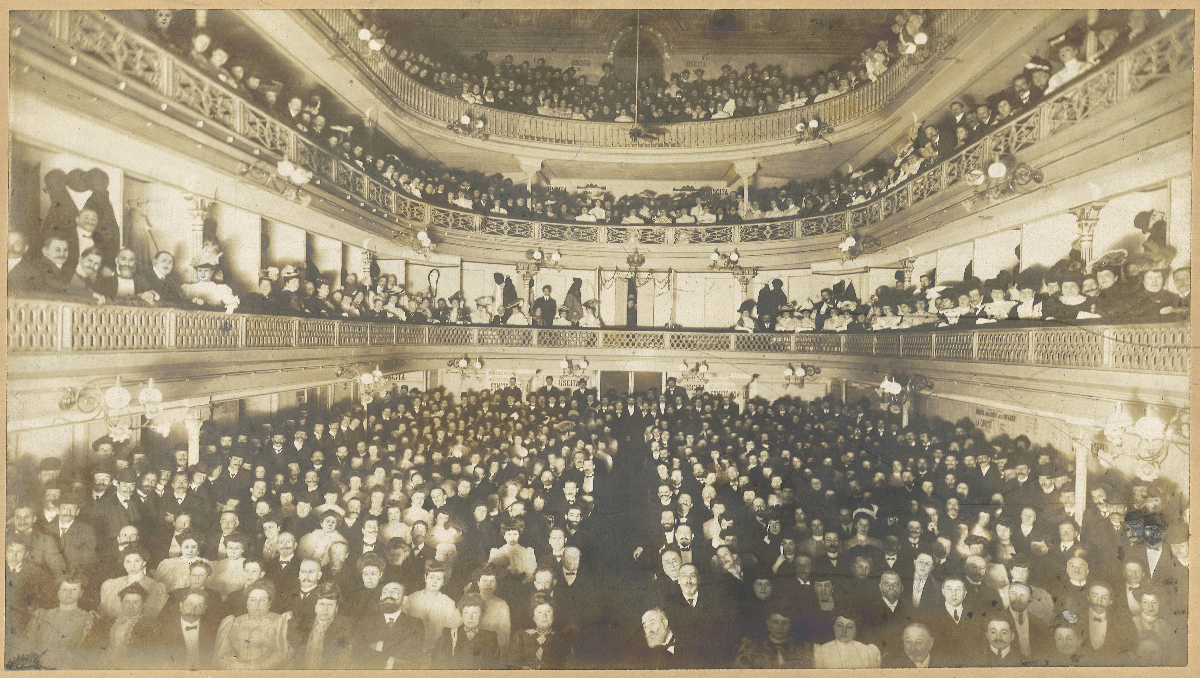
On 9 March 1908, in a packed hall at the Filarmonico-Drammatica Society in Trieste, Filippo T. Marinetti read a selection of poems by French Symbolist poets and gave a preview recitation of his Inno all’automobile (“Hymn to the Car”). In the April issue of “Poesia“, he published the speech he had given at the Filodrammatica under the title Il mare tricolore (“Patriotic Debut by F.T. Marinetti“).

Opposite the headquarters of the Teatro Filodrammatico stood the ‘Città di Parenzo’ restaurant, at 8 Via degli Artisti, which also had an entrance on Corso Vittorio Emanuele – now Corso Italia. It was here that the Futurist dinner took place in 1932, attended by Marinetti.

Società Filodrammatica e ristorante Città di Parenzo Foto Civico Museo Teatrale “C. Schmidl” - inv. CMT_F_007761
Filodrammatica Society and the ‘Città di Parenzo’ restaurant Photo: “C. Schmidl” Municipal Theatre Museum – inv. CMT_F_007761

06. "C. SCHMIDL" THEATRE MUSEUM

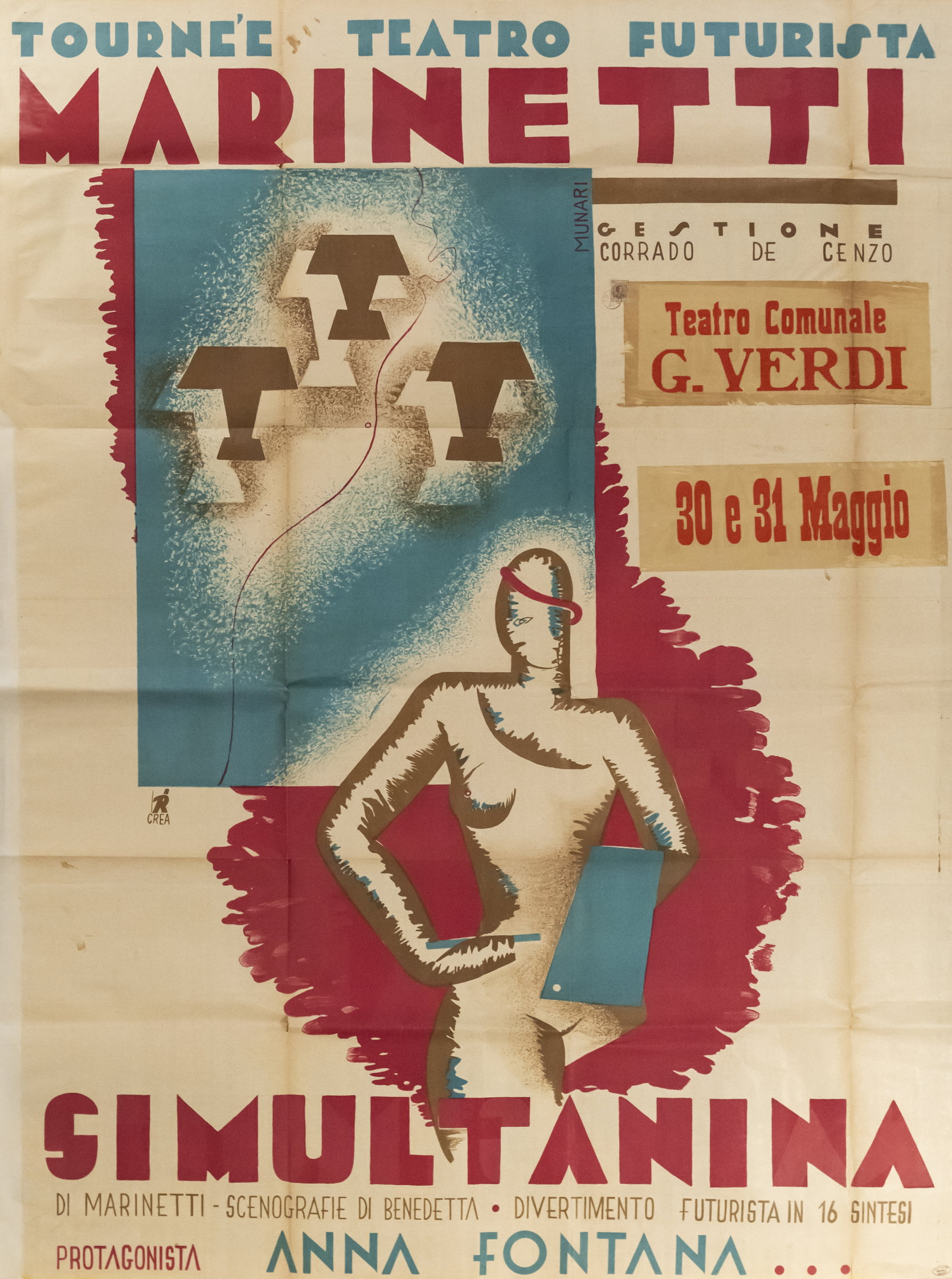
The movement’s high priest regarded theatre as the art form in which the principles of dynamism and subversion of conventional morality could be most effectively applied. Futurist evenings were held at the Teatro Politeama Rossetti, where he recited and staged musical performances. The dancer Giannina Censi returns to Trieste, following her performance in Quartetto Tattile in 1924, to perform at the “G. Verdi” Municipal Theatre in Marinetti’s avant-garde play, Simultanina. Futurist entertainment in 16 scenes.

Cartelloni dello spettacolo di danza Simultanina Foto Civico Museo Teatrale "C. Schmidl” – inv. CMT_MA_TV_139_24
Posters for the dance performance Simultanina Photo: “C. Schmidl” Municipal Theatre Museum – inv. CMT_MA_TV_139_24

07. VIA SILVIO PELLICO, 2

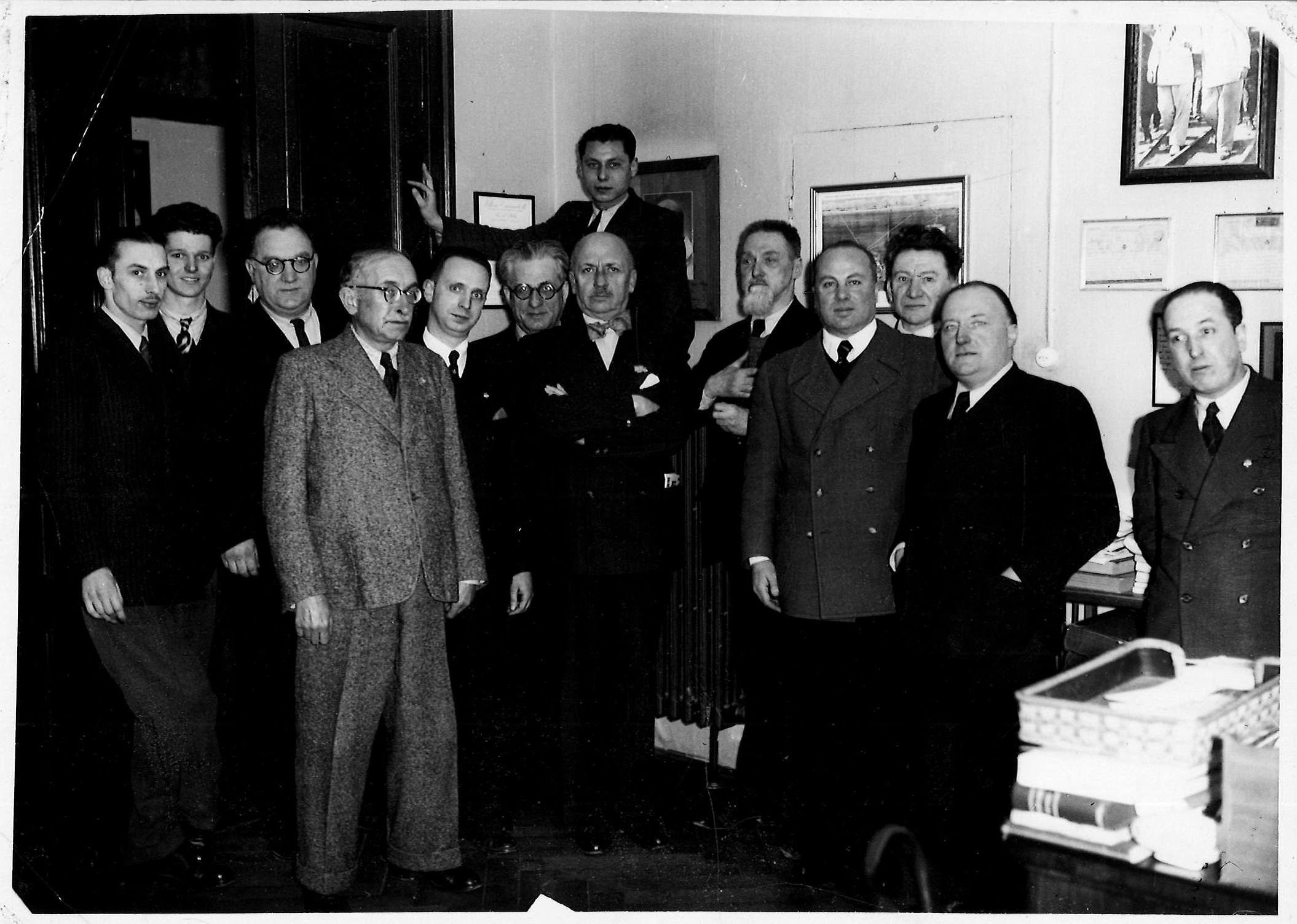
Marinetti con Bruno Sanzin, Silvio Benco, Rino Alessi, Mario Nordio e la redazione del “Piccolo” di Trieste, 15 marzo 1939 coll. Biblioteca Civica “A. Hortis”
Marinetti with Bruno Sanzin, Silvio Benco, Rino Alessi, Mario Nordio and the editorial staff of Trieste’s “Piccolo“, 15 March 1939 collection of the “A. Hortis” Civic Library
Having arrived in Trieste at the invitation of the Trieste Cultural Circle of Professionals and Artists to mark, with a lecture on the evening of 15 March 1939, the thirtieth anniversary of the Futurist movement, Marinetti visited the editorial office of the “Piccolo“. The photograph, from the archive of Bruno Sanzin and recently acquired by the “Hortis” Civic Library, shows, alongside the founder of Futurism, Sanzin himself, Silvio Benco, the editor of the Trieste daily newspaper, Rino Alessi, and, next to the latter, the long-standing correspondent Mario Nordio.

08. PIAZZA GOLDONI, CORNER OF VIA CARDUCCI, 8

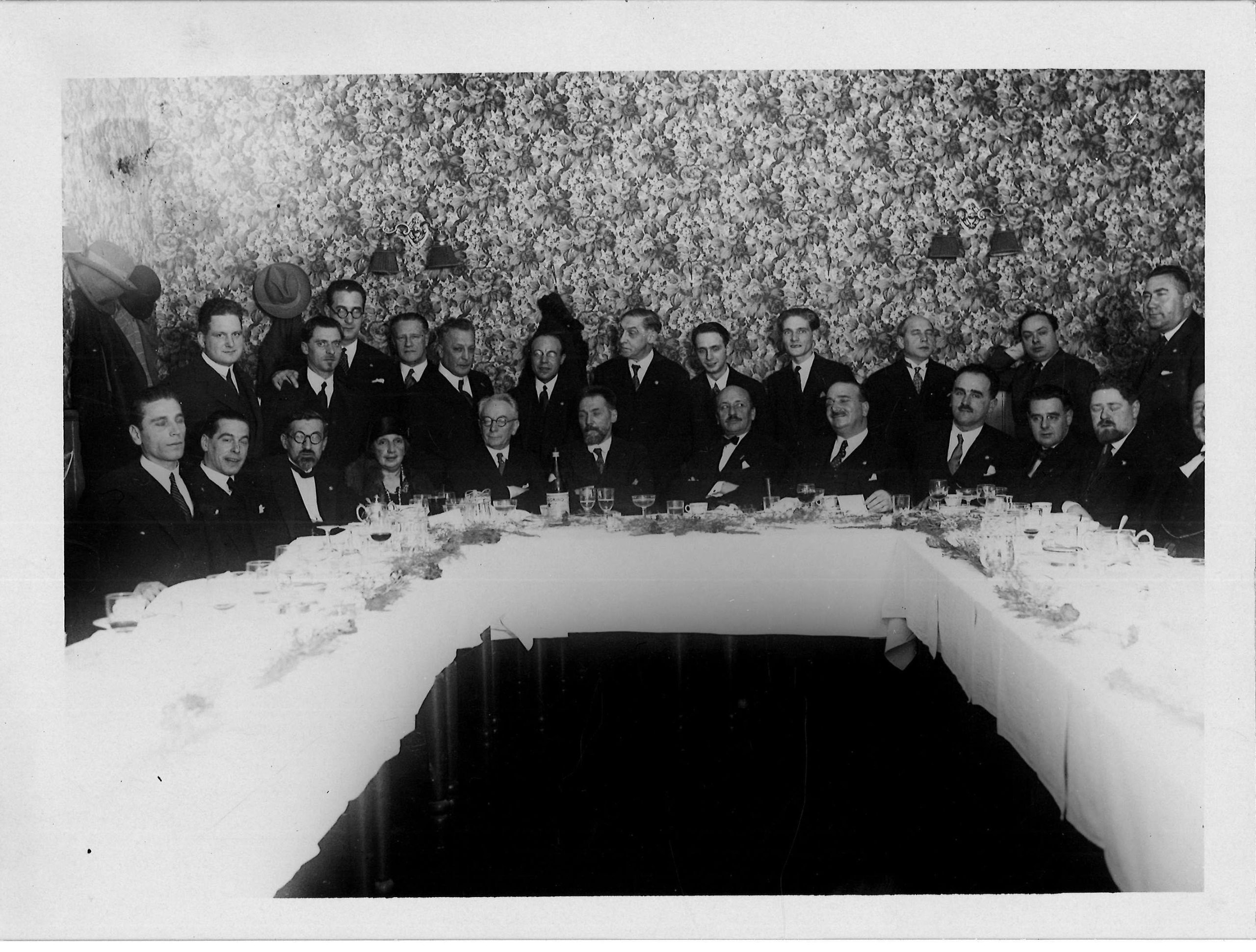
Colazione in onore di F. T. Marinetti al Ristorante Cimetta  coll. Biblioteca Civica “A. Hortis”
Breakfast in honour of F. T. Marinetti at the Ristorante Cimetta coll. “A. Hortis” Civic Library
On 1 December 1929, Marinetti was invited to a luncheon hosted at the Cimetta Restaurant in Trieste. The photograph – from Bruno G. Sanzin’s personal archive – features some of the most prominent figures in Trieste at the time. In addition to the Podestà Giorgio Marco Pitacco and the Federal Secretary of the National Fascist Party, Giuseppe Cobolli Gigli, the photograph also features Silvio Benco, to Marinetti’s right; the rationalist architect Umberto Nordio, the first person seated on the left; and Bruno Sanzin. The news photograph was published the following day, 2 December, in “Il Piccolo delle ore diciotto“.

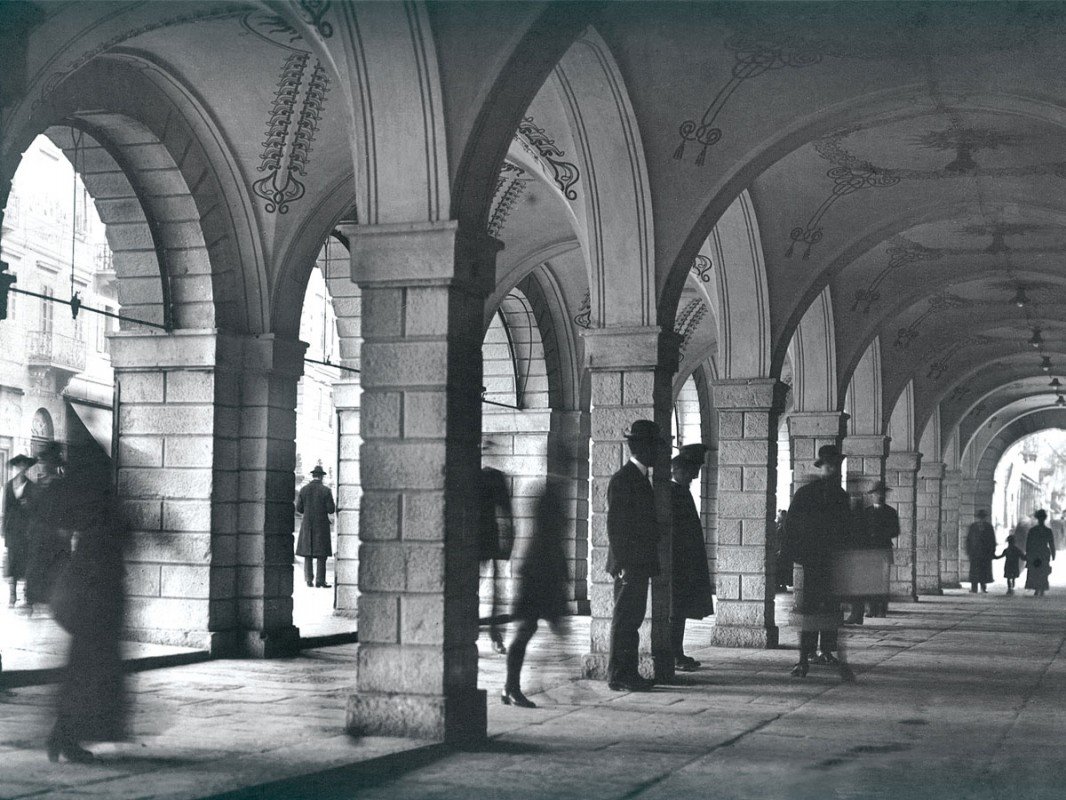
09. THE ARCADES OF CHIOZZA

According to newspaper reports, in 1914 the painter-members of the Trieste Art Circle organised a Futurist-style exhibition in the halls of the Permanente. It was the Carnival period, and the artists played a prank on the public by imitating the style of the leading figures of the national Futurist art movement and signing their works with made-up names: Obici and Falloux (Pietro Lucano), Aquila (Argio Orell), Siluranti (Glauco Cambon), Stromboli (Hans von Heider), Vampa (Ugo Flumiani), Puntanera (Franco Cernivetz), Antonj (Pietro A. Sencig), Lafargue (Tullio Silvestri), Scoccioni (Adolfo Levier), Vico Strani (Vittorio Covacich).

Sede del Circolo artistico triestino Fototeca dei Civici Musei di Storia ed Arte - inv. F210802
Headquarters of the Trieste Artistic Society Photo Archive of the Civic Museums of History and Art – inv. F210802

10. VIA DELLA GINNASTICA, 47

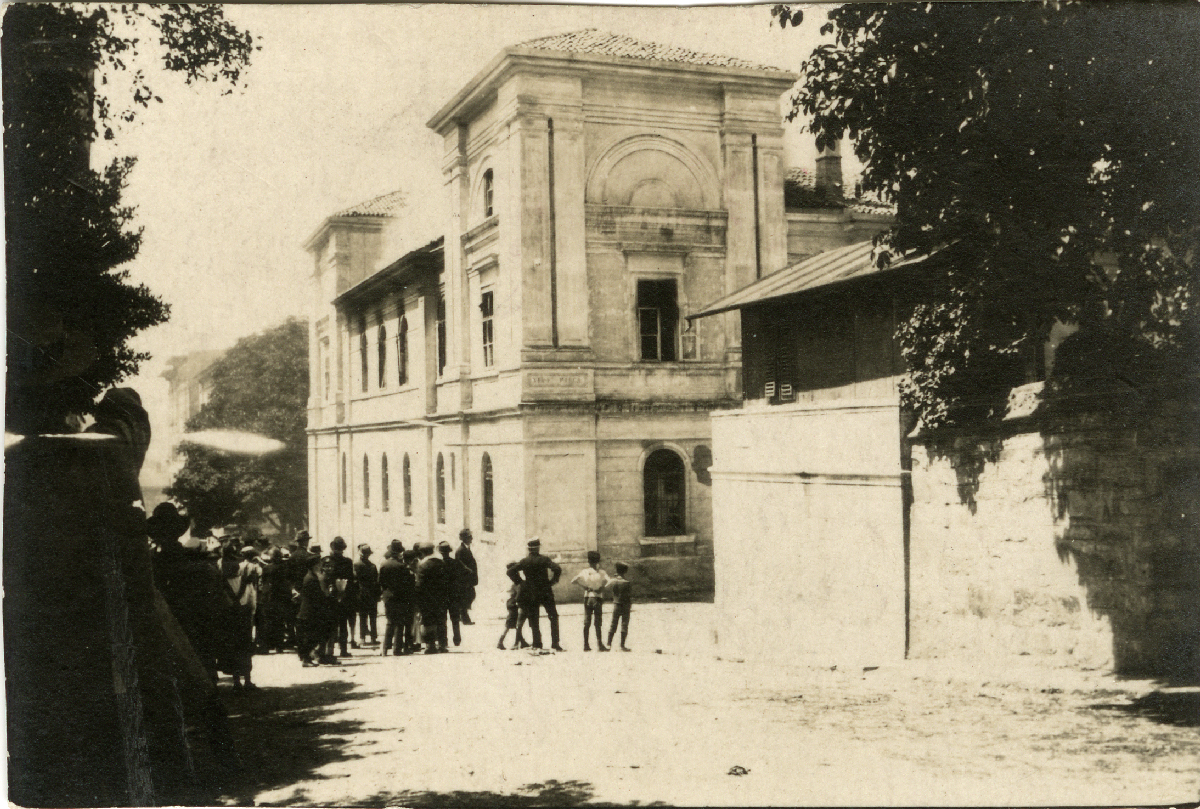
Socrate Gherlanz, Incendio alla sede della Ginnastica Triestina, 25 maggio 1915 Fototeca dei Civici Musei di Storia ed Arte - inv. F008527
Socrate Gherlanz, Fire at the headquarters of the Ginnastica Triestina, 25 May 1915 Photo Archive of the Civic Museums of History and Art – inv. F008527

In the days following Marinetti’s lecture at the Università Popolare, the future founder of Futurism made a passionate speech at the Società Ginnastica Triestina, protesting against the Vienna government’s refusal to grant Trieste an Italian-language university. His impassioned speech sparked serious unrest and a brawl involving the police and pro-Habsburg supporters, prompting the police to arrest him for disturbing public order and spreading anti-Austrian propaganda. This was the true political and incendiary prologue to Futurism, taking place just two months before the publication of the official Manifesto in “Le Figaro“ (February 1909), with his speeches at the demonstrations in support of the Italian university culminating in the publication in “Poesia“ of the text Trieste, la nostra bella polveriera (“Trieste, our beautiful powder keg”).

11. LARGO GIORGIO GABER, 1

Giuseppe Wulz, Politeama Domenico Rossetti Fototeca dei Civici Musei di Storia ed Arte - inv. F010495
Giuseppe Wulz, Politeama Domenico Rossetti Photo Archive of the Civic Museums of History and Art – inv. F010495

On the evening of 12 January 1910 at the Teatro Rossetti, Marinetti appeared alongside Armando Mazza and Aldo Palazzeschi, drawing boos and derisive reactions from the audience. He wrote about this in Lettera aperta ai miei fischiatori Triestini! (“Open Letter to My Triestine Boosers!”).

This marked the beginning of a movement of young avant-garde artists from Trieste. Subsequently, the Politeama became the venue for staging the innovative theatrical works that Marinetti conceived in collaboration with the Trieste-based musician Silvio Mix. On the evening of 21 January 1924, the Compagnia del Nuovo Teatro Futurista staged the ballet Quartetto tattile, by Marinetti and Cangiullo, set to music by Franco Casavola and the Trieste-born Silvio Mix. On this occasion, the dancer Giannina Censi performed in Trieste for the first time.

12. VIA GIULIA, 9

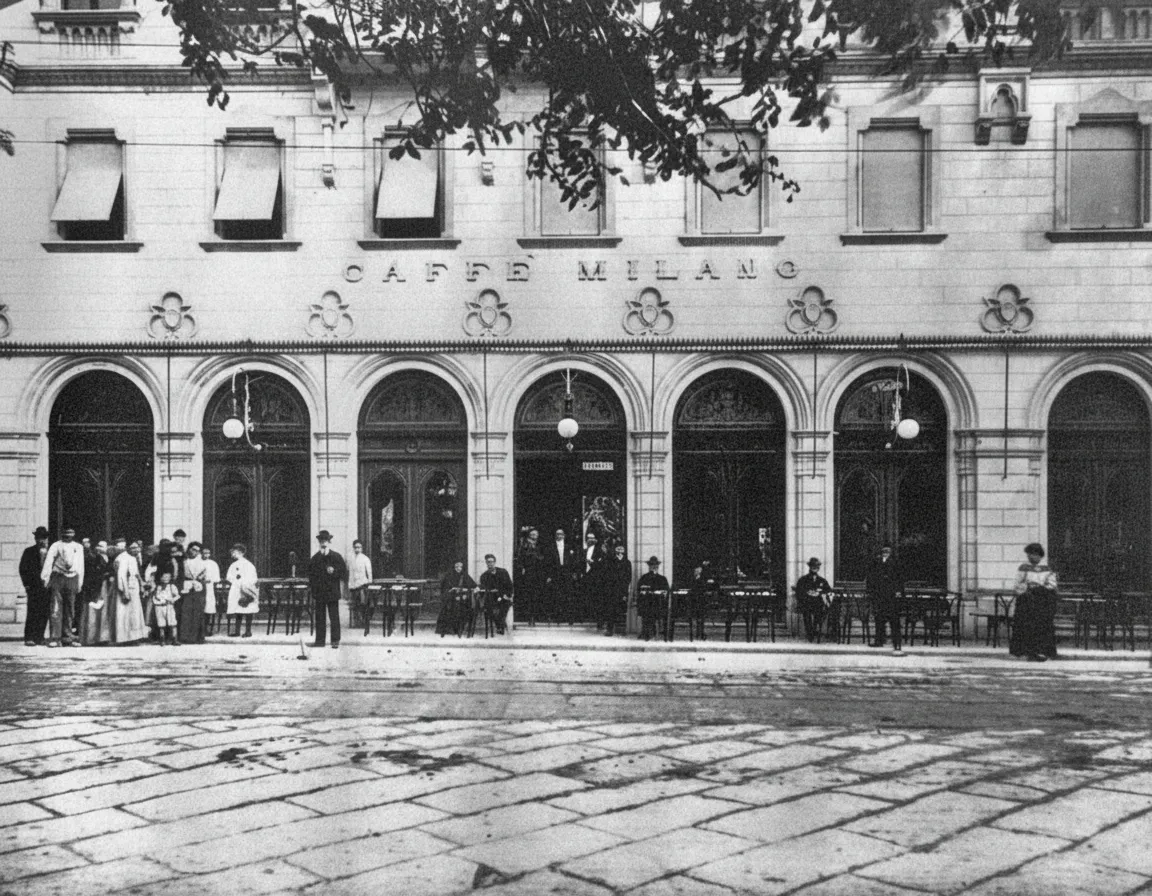
In his Report on the Triumph of Futurism in Trieste, Marinetti recounts that the evening at the Politeama Rossetti continued at Caffè Milano following the performance at the Teatro Rossetti on 12 January 1910. “We enter Caffè Milano, a furnace from which the burning embers of the most enthusiastic cheers burst forth and surge towards us! (…) We leave Caffè Milano to carry our fiery Italian spirit into the nocturnal haunt of the Austrian officers: the Eden”.

Il Caffè Milano
Il Caffè Milano

13. PIAZZA OBERDAN 

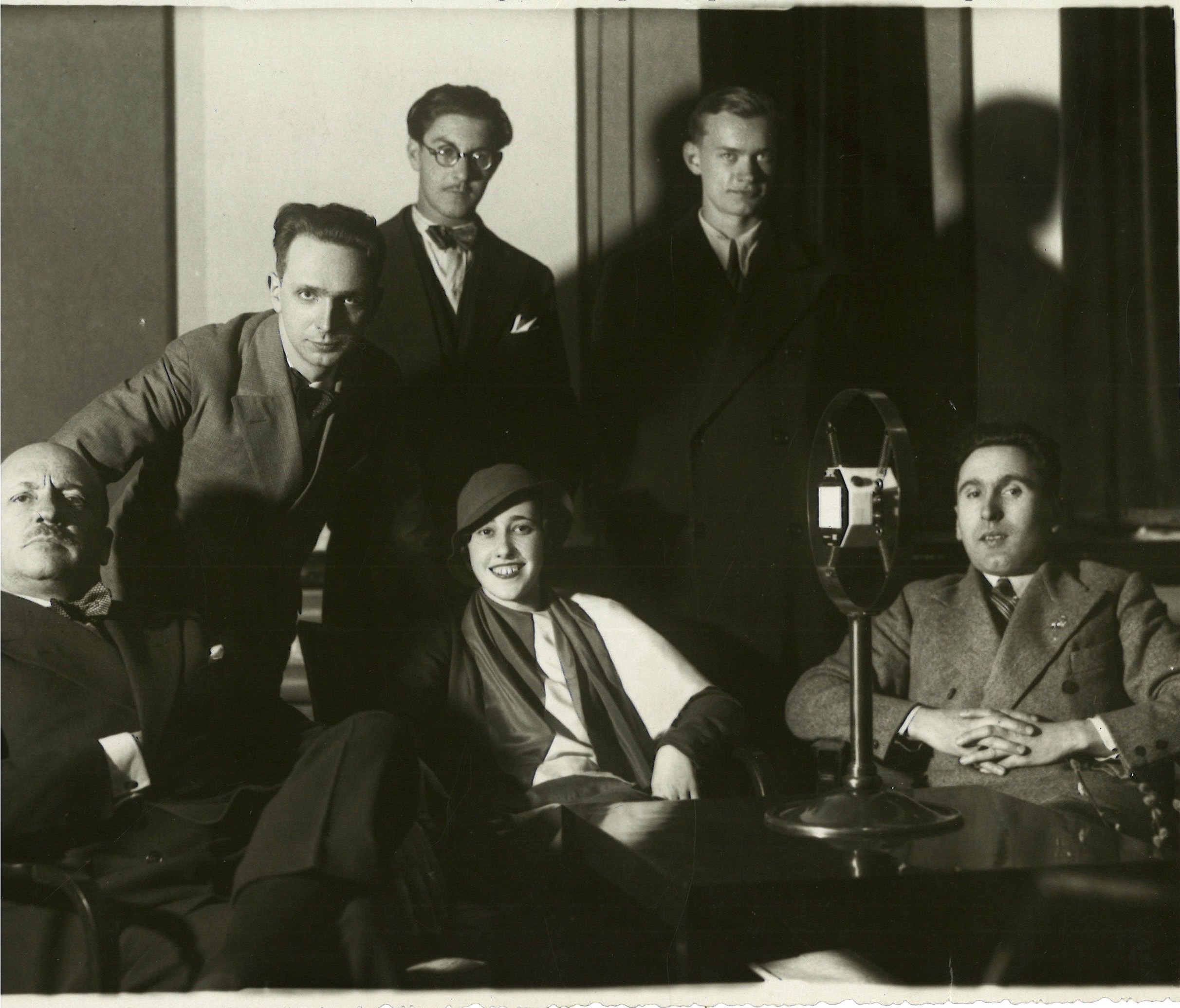
The EIAR’s Trieste headquarters was inaugurated in 1931 in Piazza Oberdan, marking the start of regular broadcasts by Radio Trieste. The monumental Rationalist-style building, which today houses the regional offices, was subsequently completed between 1938 and 1942 to a design by the architects Raffaello Fagnoni and Umberto Nordio.

To mark the opening of the National Exhibition of Futurist Photography, organised by Bruno G. Sanzin at the Permanent Exhibition of the Trieste Fine Arts Union from 1 to 17 April 1932, the EIAR headquarters hosted a meeting with the founder of the Futurist movement, Marinetti. The photograph, taken by Ferruccio Antonio Demanins, relates to this event; it shows Marinetti in the company of Giannina Censi, with, behind him, Sanzin, the Gorizia-based journalist Valentino Danieli, the painter Tullio Crali and the Head of the Technical Department at Radio Trieste, Giuseppe Airoldi.

La sede dell'EIAR Giannina Censi, Tullio Crali, Filippo Tommaso Marinetti e Bruno Giordano Sanzin nella sede Eiar di Trieste, aprile 1932
The EIAR headquarters Giannina Censi, Tullio Crali, Filippo Tommaso Marinetti and Bruno Giordano Sanzin at the EIAR headquarters in Trieste, April 1932

Condividi